How to Check Transmission Fluid: Complete Guide for Car Owners

1. Why Checking Transmission Fluid Is So Important
Check Transmission Fluid: The transmission fluid in your vehicle plays a vital role in keeping your transmission system cool, lubricated, and performing efficiently. It’s the lifeblood of your transmission — helping gears shift smoothly, reducing friction, and preventing overheating.
Over time, transmission fluid can degrade, lose viscosity, or become contaminated, leading to potential damage. Low or dirty fluid can cause:
-
Hard shifting or gear slipping
-
Grinding noises
-
Transmission overheating
-
Reduced fuel efficiency
-
Complete transmission failure
By learning how to check transmission fluid regularly, you can detect problems early and extend your transmission’s lifespan.
Experts recommend checking the fluid every month or at least every 5,000 miles, depending on driving conditions and your vehicle type.
2. Understanding the Function of Transmission Fluid
Before you check your transmission fluid, it’s essential to know what it does and why it matters.
Transmission fluid serves several key purposes:
-
Lubrication: It minimizes wear and tear between moving parts.
-
Cooling: It helps dissipate the heat generated by the friction of gears.
-
Hydraulic Function: It provides the pressure needed for smooth gear engagement.
-
Cleaning: It removes debris and prevents buildup within the transmission.
There are two main types of transmission systems:
-
Automatic Transmissions: Use Automatic Transmission Fluid (ATF) that’s specifically designed for hydraulic pressure and heat resistance.
-
Manual Transmissions: May use gear oil or manual transmission fluid, depending on the manufacturer’s specifications.
Keeping your transmission fluid at the correct level ensures smooth performance, less maintenance cost, and longer engine life.
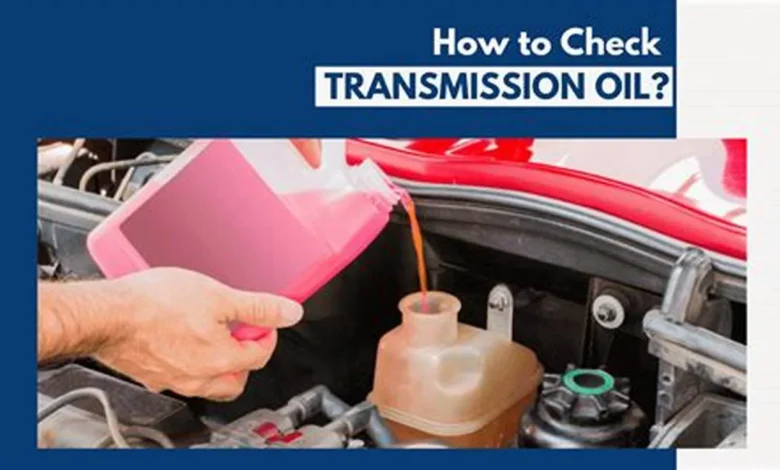
3. How to Check Transmission Fluid (Step-by-Step)
Checking transmission fluid is a simple yet crucial maintenance task that you can perform yourself in just a few minutes. Follow these easy steps:
Step 1: Park on a Level Surface
Make sure your car is on a flat surface. Engage the parking brake and let the engine idle. For most automatic vehicles, the fluid is checked while the engine is warm and running.
Step 2: Open the Hood
Locate the transmission dipstick — usually found near the back of the engine, often labeled “Transmission” or with a red/yellow handle.
Step 3: Pull Out and Wipe
Remove the dipstick and wipe it clean using a lint-free cloth or paper towel.
Step 4: Reinsert and Remove Again
Reinsert the dipstick fully, then remove it again to check the fluid level. The dipstick will have “Full” and “Low” marks.
Step 5: Inspect the Fluid’s Color and Smell
-
Healthy Fluid: Clear red or pink and slightly oily.
-
Contaminated Fluid: Dark brown, dirty, or smells burnt — indicating it’s time for a transmission service or fluid change.
Step 6: Add Fluid if Needed
If the level is low, add the correct type of transmission fluid recommended in your owner’s manual. Use a small funnel and add gradually — overfilling can cause damage.
This routine takes less than 10 minutes but can save you from costly repairs in the future.
4. Signs You Need to Check or Change Transmission Fluid
Even with regular maintenance, your car might give subtle warnings that your transmission fluid needs attention. Recognizing these signs early can prevent serious issues.
Common Warning Signs:
-
Delayed gear shifts or rough transition between gears.
-
Grinding or whining noises while driving.
-
Transmission slipping (engine revs but vehicle doesn’t accelerate).
-
Burning smell from under the hood.
-
Visible fluid leak (usually red or brown spots under the vehicle).
If you experience any of these symptoms, check your transmission fluid immediately.
In many cases, topping off or changing the fluid resolves the issue. However, if problems persist, a professional inspection might be required to avoid transmission replacement, which can cost thousands of dollars.
5. When and How Often to Replace Transmission Fluid
Even the best-quality fluid has a lifespan. Over time, heat and friction break down the additives, reducing the fluid’s effectiveness.
Replacement Frequency:
-
Automatic Transmission: Every 30,000 to 60,000 miles, depending on the manufacturer’s guidelines.
-
Manual Transmission: Typically every 30,000 to 50,000 miles.
-
Severe driving conditions (towing, city traffic, extreme heat) may require more frequent fluid changes.
Fluid Change Process:
-
Drain old fluid from the transmission pan.
-
Replace the transmission filter if your car has one.
-
Refill with new, manufacturer-approved fluid.
-
Test-drive the vehicle to ensure smooth shifting.
Neglecting to change old or burnt transmission fluid can lead to overheating, poor performance, and irreversible internal damage.
6. Tips for Maintaining Transmission Health
Proper transmission care goes beyond just checking or replacing fluid — it’s about adopting good driving and maintenance habits.
Pro Maintenance Tips:
-
Warm up your car before driving in cold weather.
-
Avoid abrupt gear changes and hard acceleration.
-
Check for leaks every few weeks, especially under the transmission area.
-
Use only OEM-approved transmission fluids listed in your vehicle manual.
-
Schedule regular mechanic inspections to catch early signs of wear.
Bonus Tip:
If your car doesn’t have a transmission dipstick (common in newer models), you may need to visit a professional mechanic to check the sealed transmission unit.
By following these steps and checking your transmission fluid regularly, you ensure that your vehicle remains reliable, efficient, and ready for the road.
Conclusion
Knowing how to check transmission fluid is one of the simplest yet most effective ways to protect your vehicle’s transmission. Regular monitoring prevents overheating, gear slipping, and major repair bills down the line.
Whether you’re an experienced driver or a beginner, spending a few minutes each month to inspect your transmission fluid level and condition can add years to your car’s lifespan — and give you peace of mind on every drive.